

Episode Art: Whitetail Deer 2025, North Carolina – Ink on Paper by Sarah C. Rose.
Dr. Peggy Smith Eppig (environmental historian, longtime ranger, and Goucher professor) joins us to talk about how stories shape land ethics, from St. Hubert and St. Cuthbert to fieldwork in West Virginia where a small chapel’s stag icon sparks a conversation about hunting, stewardship, and community norms.
We trace the hagiography of “holy gamekeepers,” a pilgrim’s encounter with an Iberian wolf on the Camino, and the local work of river care and urban stream monitoring—asking how lived experience (and occasional high strangeness) changes how we act on the ground.
Dr. Eppig’s Pilgrimage Substack is here: Uphill Road. You can find her nature blog called The Land Journals there as well.
Here is a video from her newly launched Youtube Channel:
And if you would like to support the show and get exclusive publications related to the topics we discuss, check out Patreon.com/TheHungryForest.
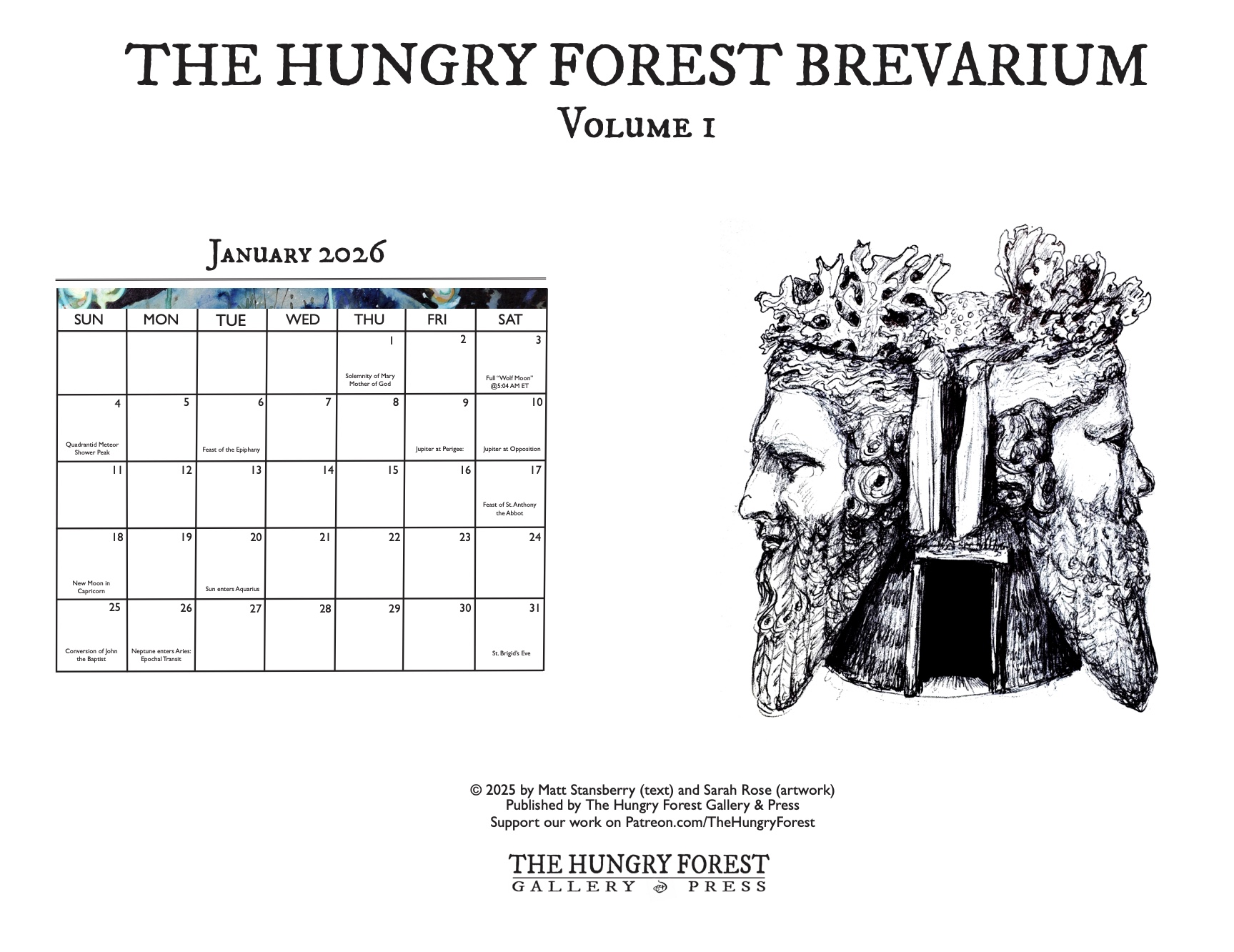
Especially if you’re interested in this intersection of saints and ecology, be sure to check out our new breviary for January.
A breviary is a book of daily readings, prayers, and observations that mark the passage of time through the year. In its original form, the breviary structured the rhythm of psalms, scripture, and reflection for clergy and monastics. Over time, it became a portable companion for private devotion and seasonal awareness. This version keeps that structure of attention but widens the field: pairing saints’ days and sky events with local ecology, fieldwork, and magical practice.
 The Campfire's Edge Podcas
Leave a comment