
Oops, Everything is Alive
This episode begins with a remembrance of Gordon White, whose work inspired the name The Campfire’s Edge and who helped give language to the idea that humans belong in a strange, haunted, more-than-human world.
I’ve also shared a written remembrance of Gordon on our Patreon, available as a public post. It includes highlights from some of our conversations over the years, including his thoughts on tarot, serpents, wilderness, and finding our place in a universe full of other beings.
You can also revisit Gordon’s appearance on The Campfire’s Edge here: Season 1, Episode 15: Hunting as Custodianship of a Living Cosmos.
Then we’re joined by Sylvia and Tristan Eden, the husband-and-wife team behind Leodrune Press. From their home in the Pacific Northwest, they write and illustrate books exploring ecology, folklore, mythology, and the experience of encountering a world that may be much stranger, and much more alive, than we usually admit.
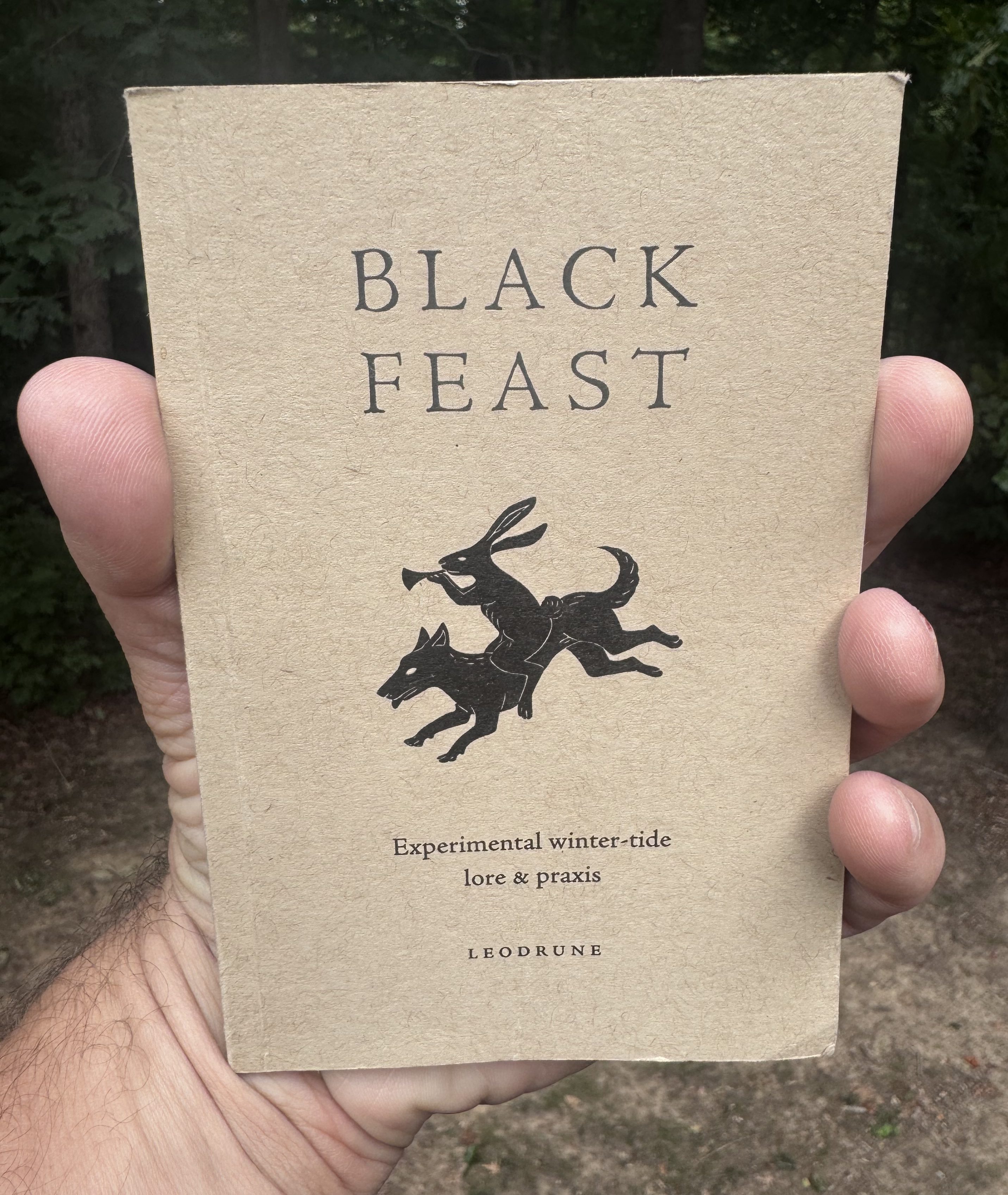
We had picked up a physical copy of Leodrune’s booklet, Black Feast at Calumnus & Honey in Asheville last fall and read the first section, Hunting Stars, and knew we had to talk to the folks behind the book.
We talk about the modern search for re-enchantment, why so many people are finding their way to old ideas through forests instead of books, the weird things that happen when you spend enough time outdoors, and why taking animism seriously is both beautiful and deeply inconvenient.
Follow Leodrune
The owl forms Sarah drew for the episode art were inspired by archaeological finds from the Iberian Peninsula. We used a bunch of them on the cover of our April Breviary (and you can see how far the Leodrune folks inspired my print production decisions).
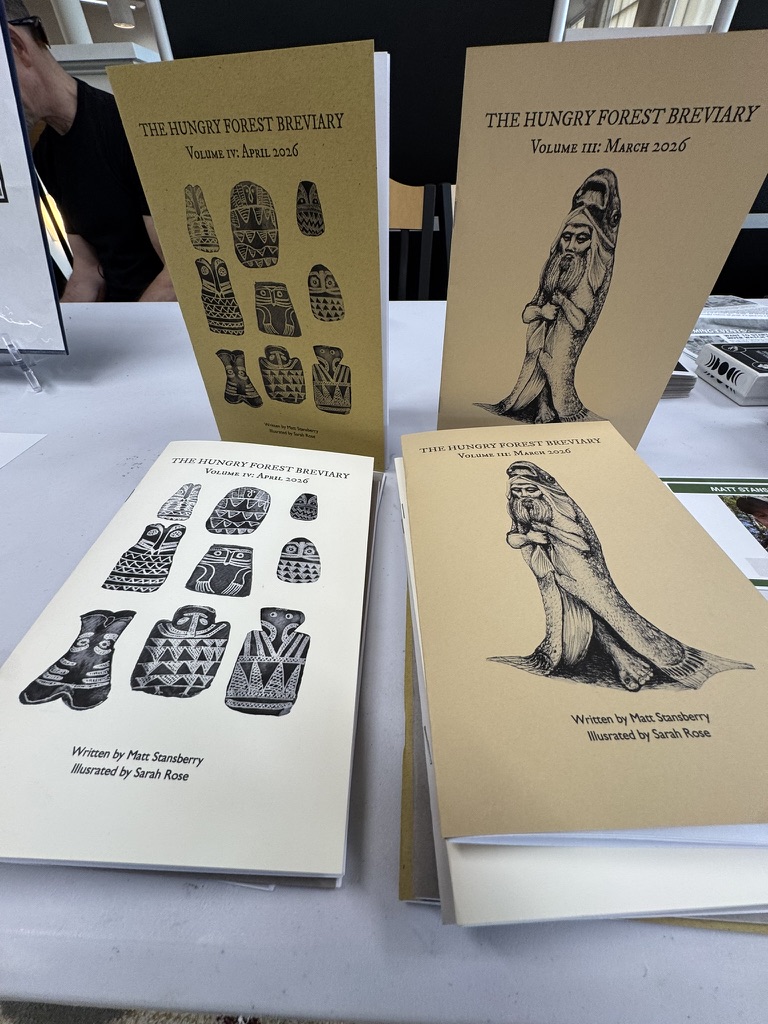
Back to the owls… Over the last century, archaeologists have uncovered roughly four thousand small slate plaques engraved with owl shapes and geometric patterns, dating to the Copper Age roughly 5,500–4,750 years ago.
Most are palm-sized and unmistakably “owl-like”: two large circles for eyes and a triangular or patterned body below. Many also have two small holes at the top of the head, which researchers believe held feathers inserted to represent the ear tufts of real owls.
For decades archaeologists assumed these plaques were religious objects: goddess figures, funerary idols, or ritual tokens placed in tombs. But a recent study proposed a different possibility: many of them may actually have been carved by children.
If that is true, these objects might record a moment that rarely survives in the archaeological record: children sitting with bits of slate, carving the watchful birds that lived in the trees around their settlements.
 The Campfire's Edge Podcas
Leave a comment